
About Sigiriya
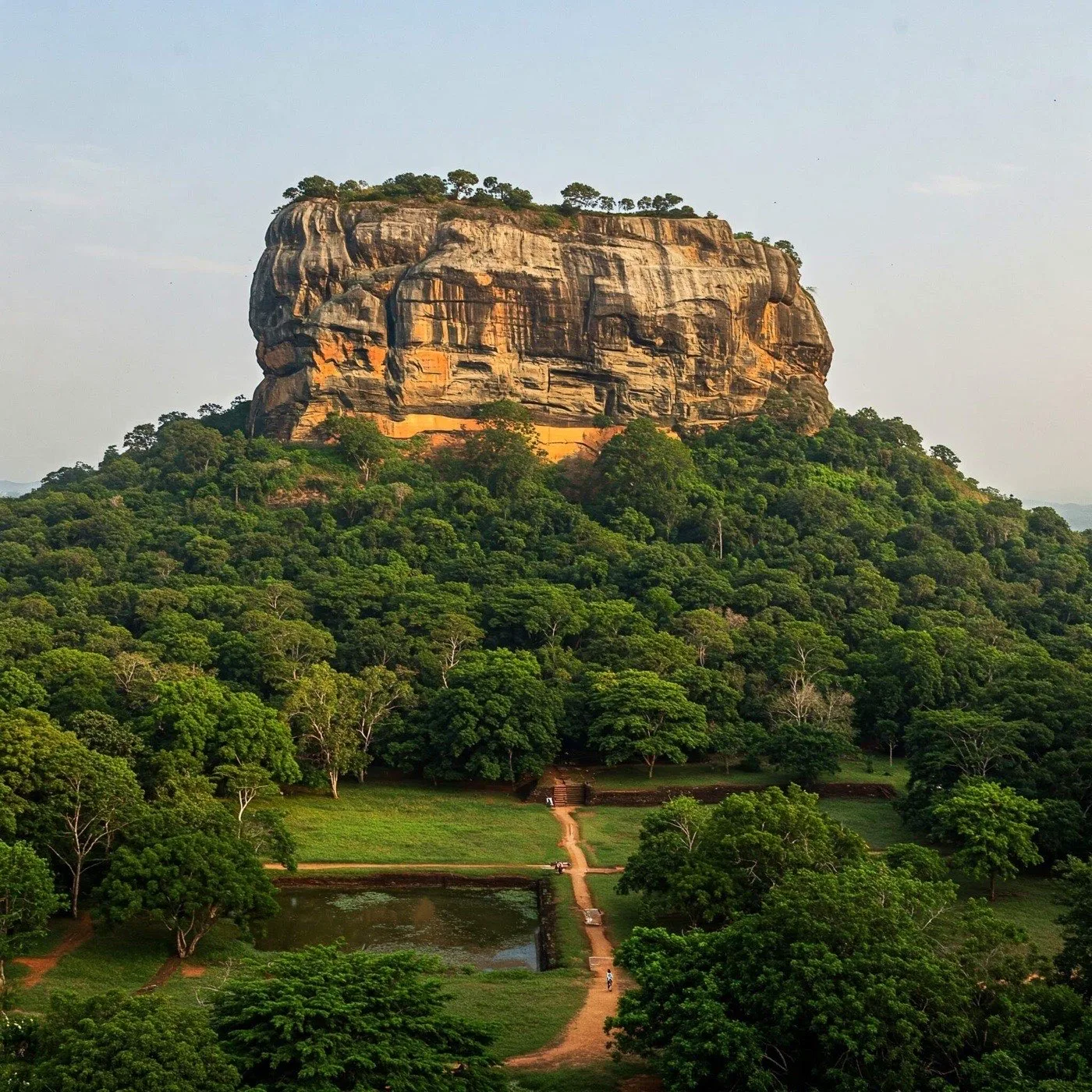
Sigiriya — the Lion Rock — is Sri Lanka's most iconic landmark and one of the best-preserved examples of ancient urban planning in Asia. Built by King Kashyapa I in the 5th century AD, the palace complex sits atop a 200-metre granite monolith rising dramatically from the central plains.
The ascent takes visitors past the famous Sigiriya Frescoes: vivid paintings of celestial maidens that have survived 1,500 years of exposure on a sheer rock face. Further up, the colossal Lion Paws gateway marks the final approach to the summit, where the ruins of the royal palace offer panoramic views stretching to the horizon on all sides.
The surrounding gardens — among the oldest landscaped gardens in the world — feature sophisticated water features, symmetrical planting beds, and boulder gardens that were designed to impress both arriving guests and the heavens themselves.
Highlights
- Scale 1,200 steps to a 5th-century palace summit
- View the Sigiriya Frescoes — ancient paintings of celestial figures
- Pass through the Lion Paws gateway on the final ascent
- Explore the oldest surviving landscaped gardens in Asia
- Panoramic 360° views over jungle, plains, and distant mountains
- UNESCO World Heritage Site since 1982
Plan & Book
Links above are affiliate links. We may earn a small commission at no extra cost to you — it helps keep this site free.
What to See & Do
Sigiriya Rock Summit & Palace Ruins
The ruined palace at the top of the 200m granite monolith — 360° views stretching to the horizon across the Cultural Triangle jungle. A 45-minute climb via iron staircases.
Sigiriya Frescoes
Brilliantly preserved 5th-century paintings of celestial apsara maidens on a sheltered rock face midway up the climb — one of the oldest surviving figurative paintings in Asia.
Water Gardens
Symmetrical pleasure gardens at the rock's base — among the oldest surviving landscaped gardens in the world, with ancient fountains still functioning via hydraulic pressure.
Pidurangala Rock
The adjacent rock to Sigiriya — a 1.5-hour scramble past a reclining Buddha and through boulder forest to a summit with arguably the best view of Sigiriya Rock itself. Far fewer crowds, minimal entry fee.
Sigiriya Museum
A modern archaeological museum at the site entrance covering the palace's history, frescoes, and the sophisticated hydraulic engineering of the Kassapan capital.
Dambulla Cave Temple
Sri Lanka's largest cave temple complex, 17 km from Sigiriya — five caves cut into a granite outcrop holding 157 Buddha statues and 2,000 sq m of murals spanning 22 centuries. A UNESCO World Heritage Site.
Getting There from Colombo
Most convenient — driver waits while you visit
Change at Dambulla. Inexpensive but slow
Take Colombo–Batticaloa line to Habarana
Most visitors combine Sigiriya with Dambulla Cave Temple (17 km away) in a single day.
Best Time to Visit
Avoid mid-afternoon visits — the exposed rock becomes extremely hot. Start early morning or late afternoon.
Traveller Tips
- ▸Arrive before 7:30 AM to beat crowds and the heat — the rock becomes packed by 10 AM
- ▸Hire the site museum audio guide (USD 5) — it brings the frescoes and gardens to life
- ▸Wear rubber-soled shoes — the metal staircases can be slippery
- ▸Carry at least 1.5L of water; there's no shade on the upper ascent
- ▸Pidurangala Rock (adjacent, USD 2 entry) gives the best view of Sigiriya — combine both
- ▸Photography of the frescoes is prohibited — enforce the rules to preserve them
Entry Fee
Ticket covers the gardens and the full rock ascent. Buy online to avoid queues.
7:00 AM – 5:30 PM daily
Ready to Visit Sigiriya?
We'll build a complete itinerary around your interests, budget, and trip length — from airport arrival to departure.