
About Colombo
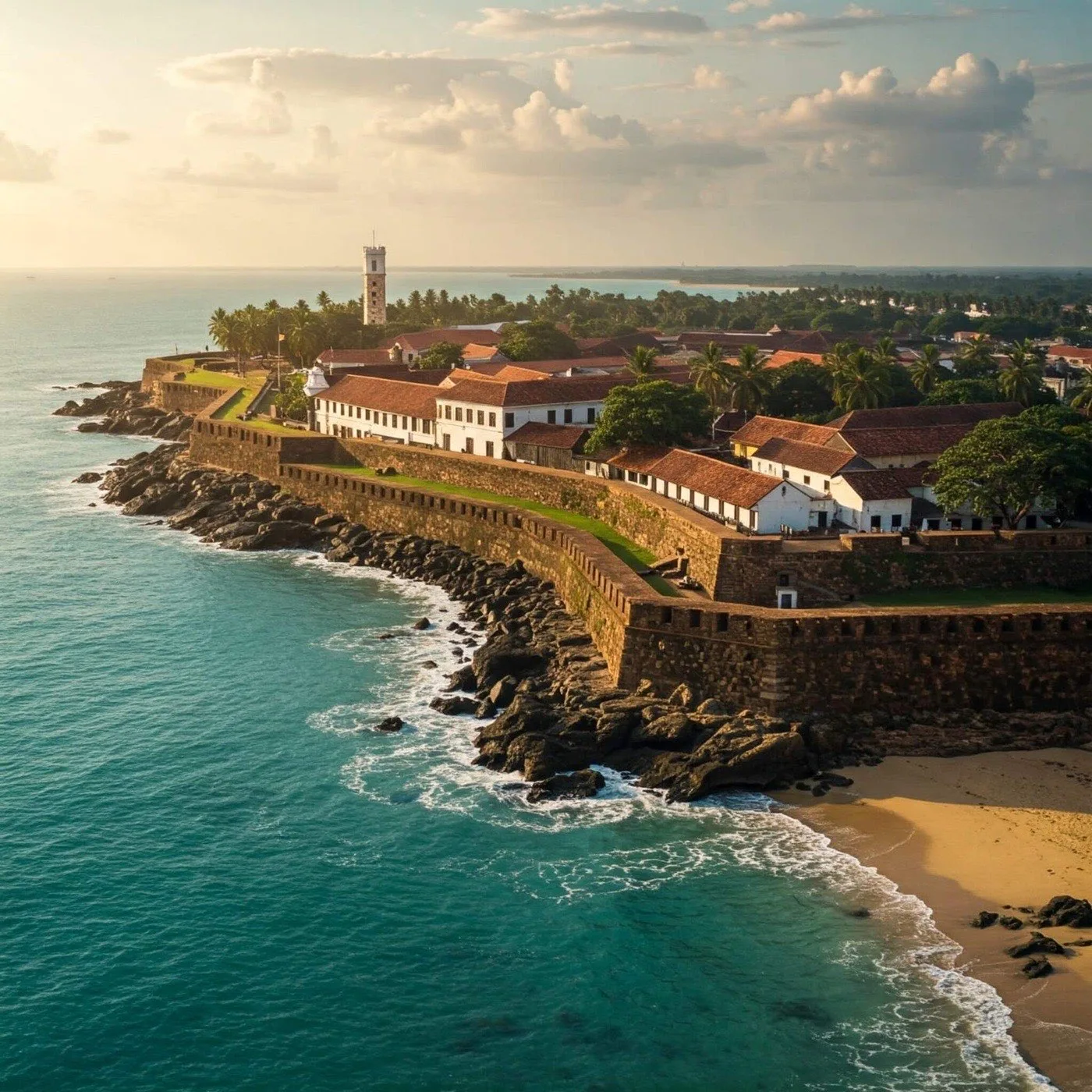
Colombo is a city in transformation — a dynamic mix of colonial history, diverse cultures, and modern ambition rising along the Indian Ocean. As Sri Lanka's commercial capital and main port, it has been a trading hub for over 2,000 years, attracting Arab, Chinese, Portuguese, Dutch, and British influences that layered one upon another to create a singularly eclectic city.
The Fort district preserves remnants of the Dutch and British colonial eras — the iconic red-brick GPO, the Grand Oriental Hotel, and the Lighthouse Clock Tower stand among modern towers and the vast new Colombo Port City development reclaimed from the sea. Pettah, the market district just east of Fort, is the commercial heart of the island — a sensory riot of narrow streets packed with vendors selling everything imaginable.
The Galle Face Green promenade is a beloved urban seafront where families, street food vendors, and kite flyers gather at sunset. The growing Colombo 7 (Cinnamon Gardens) neighbourhood is the city's leafiest quarter — home to the National Museum, the Independence Memorial Hall, and the finest colonial bungalows now converted to restaurants and galleries.
Highlights
- Explore the Pettah Bazaar — Sri Lanka's most intense street market
- Walk Galle Face Green at sunset with street food and kite flying
- Visit the National Museum of Colombo for island history
- Explore the Dutch and British colonial architecture of Fort district
- Dine at the city's excellent range of cuisines from kottu to fine dining
- Shop at Odel, Arcade Independence Square, or Dutch Hospital Precinct
Plan & Book
Hotels & Stays
Search on Booking.com
Tours & Experiences
Browse on GetYourGuide
Bus & Train Tickets
Book on 12Go Asia
Links above are affiliate links. We may earn a small commission at no extra cost to you — it helps keep this site free.
What to See & Do
Galle Face Green
A 5-hectare oceanfront promenade — Colombo's favourite public space. Street vendors sell isso wade (prawn fritters) and kite flyers fill the sky at dusk. The backdrop of luxury hotels and the new Colombo Port City creates a striking scene.
Pettah Bazaar
The colonial-era street market district — a dense grid of specialised streets (fabric, spices, electronics, gold, books) packed with vendors and total sensory overload. One of Asia's most intense urban markets.
National Museum of Colombo
Sri Lanka's premier museum — royal regalia, ancient Anuradhapura-era sculpture, colonial artefacts, and the ivory throne of the last Kandyan king. Essential context before heading into the Cultural Triangle.
Dutch Hospital Precinct
A restored 17th-century VOC hospital in Fort — the most atmospheric dining and boutique precinct in the city, with excellent restaurants set in colonial arches.
Kelaniya Raja Maha Vihara
Sri Lanka's most sacred Buddhist temple on the Kelani River banks — where the Buddha is said to have preached during his third visit to the island. Extraordinary murals depicting scenes from the Jataka tales.
Gangaramaya Temple
A fascinating urban Buddhist temple complex beside Beira Lake — an eclectic mix of Sri Lankan, Thai, Indian, and Chinese Buddhist architecture, with an adjoining museum of religious artefacts and a herd of resident elephants.
Independence Memorial Hall
A grand Kandyan architectural monument in Cinnamon Gardens, built to mark Ceylon's independence in 1948. The surrounding park with its lion statues and reflecting pool is excellent for early morning walks.
Jami Ul-Alfar Mosque (Red Mosque)
A striking candy-striped red-and-white mosque in the heart of Pettah — built in 1909, its Moorish-influenced façade is one of the most photographed buildings in Colombo. The interior is equally ornate; modest dress and removing footwear required.
Seema Malakaya Meditation Centre
A serene floating meditation hall on Beira Lake designed by Geoffrey Bawa in 1978 — connected to the Gangaramaya Temple by a bridge, with an open pavilion of Buddha images reflected in the still water. A rare pocket of calm in central Colombo.
Colombo Lotus Tower
The tallest self-supported structure in South Asia at 356m — shaped like a lotus blossom, it dominates the Colombo skyline. The observation deck offers 360° views across the city, the harbour, and on clear days, the hill country. Opened in 2019.
Getting There from Colombo
Bandaranaike International Airport is 35 km north of the city centre. Use metered taxis or pre-booked PickMe/Uber.
Colombo is the arrival/departure point for most Sri Lanka trips — typically the first and last night of any itinerary.
Best Time to Visit
Colombo is visitable year-round. The south-west monsoon (May–September) brings heavy rain but doesn't interrupt city activity much.
Traveller Tips
- ▸Use Grab, Uber, or PickMe apps for taxis — metered taxis are scarce and tuk-tuks should always be negotiated before boarding
- ▸Pettah is best visited on weekday mornings — avoid Friday afternoons and weekends
- ▸The Dutch Hospital Precinct has excellent restaurants at all price points — book Seafood Cove for dinner
- ▸Galle Face at sunset (6:00–7:00 PM) is a local institution — eat isso wade from the street vendors
- ▸The National Museum closes on Tuesdays — check before visiting
- ▸Colombo traffic is severe during rush hours (7:30–9:30 AM, 5:00–7:30 PM) — plan city travel accordingly
Ready to Visit Colombo?
We'll build a complete itinerary around your interests, budget, and trip length — from airport arrival to departure.